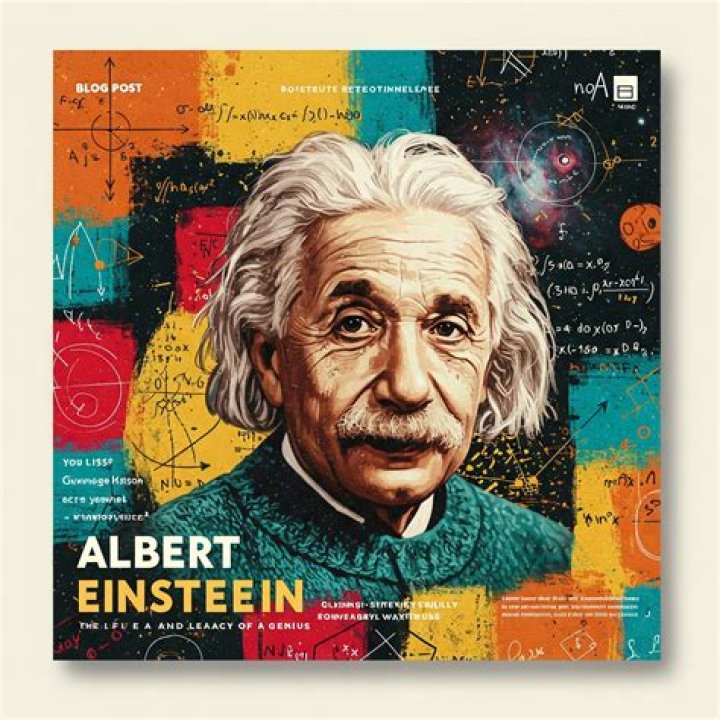
Albert Einstein is one of the most influential physicists in history, known for his groundbreaking contributions to the field of theoretical physics. His theories, particularly the theory of relativity, revolutionized our understanding of time, space, and energy. In this article, we will explore the life, achievements, and enduring legacy of Albert Einstein, providing insights into his personal life, scientific contributions, and the impact he has had on modern science and society.
From his early years in Germany to his later life in the United States, Einstein's journey is filled with fascinating stories that highlight his brilliance and unique perspective on the world. We will delve into his major theories, including the famous equation E=mc², and discuss how his work laid the foundation for many technological advancements we enjoy today.
Moreover, this article will emphasize the importance of Einstein's contributions to both science and humanity, showcasing how his thoughts on pacifism, civil rights, and education remain relevant in contemporary discussions. Join us as we navigate through the remarkable life of Albert Einstein and uncover the reasons he is celebrated as a genius of our time.
Biography of Albert Einstein
Albert Einstein was born on March 14, 1879, in Ulm, Germany. He grew up in a secular Jewish family and demonstrated an early interest in science and mathematics. Despite facing challenges in his education, Einstein's passion for knowledge led him to excel in his studies. He completed his education at the Polytechnic Institute in Zurich, Switzerland, where he graduated in 1900.
| Personal Information | Details |
|---|---|
| Name | Albert Einstein |
| Born | March 14, 1879 |
| Birthplace | Ulm, Germany |
| Died | April 18, 1955 |
| Nationality | German, later Swiss and American |
| Field | Theoretical Physics |
| Awards | Nobel Prize in Physics (1921) |
Early Life and Education
Einstein's early life was marked by a deep curiosity about the nature of the universe. He struggled with the rigid educational system in Germany, which often stifled creativity. However, he found solace in self-study and exploration of scientific concepts. After completing his secondary education, he enrolled at the Polytechnic Institute in Zurich, where he met fellow students who would later become important figures in his life.
The Turning Point
In 1902, Einstein secured a job at the Swiss Patent Office in Bern. This position provided him with the financial stability to pursue his scientific interests. During this time, he published several groundbreaking papers that would eventually lead to his recognition as a leading physicist.
Scientific Contributions
Albert Einstein made numerous contributions to physics, but some of the most notable include:
- Photoelectric Effect: His work on the photoelectric effect earned him the Nobel Prize in Physics in 1921, establishing the foundation for quantum theory.
- Special Relativity: Introduced in 1905, this theory revolutionized the understanding of space and time, leading to the equation E=mc².
- General Relativity: Published in 1915, this theory expanded on special relativity and introduced the concept of gravity as the curvature of spacetime.
The Theory of Relativity
The theory of relativity is perhaps Einstein's most significant contribution to science. It consists of two parts: special relativity and general relativity. Special relativity addresses the physics of objects moving at constant speeds, particularly at speeds close to the speed of light. It introduced the idea that time and space are intertwined, leading to the famous equation E=mc², which establishes the equivalence of mass and energy.
General Relativity Explained
General relativity, on the other hand, deals with the effect of gravity on the fabric of space and time. It posits that massive objects like planets and stars warp the spacetime around them, causing the phenomenon we perceive as gravity. This theory has been confirmed through various experiments and observations, including the bending of light around massive objects and the detection of gravitational waves.
Impact on Society
Einstein's theories have profoundly impacted not only the field of physics but also technology and society as a whole. His work laid the groundwork for innovations such as:
- GPS Technology: The principles of relativity are crucial for the accuracy of GPS systems, which rely on precise timing and positioning.
- Nuclear Energy: Einstein's mass-energy equivalence has been foundational in the development of nuclear energy, leading to both power generation and weapons.
- Quantum Mechanics: His contributions to quantum theory have shaped modern physics and technology, influencing areas such as electronics and computing.
Awards and Honors
Throughout his life, Albert Einstein received numerous awards and honors for his contributions to science, including:
- Nobel Prize in Physics (1921)
- Copley Medal (1925)
- Max Planck Medal (1929)
Personal Life
Einstein's personal life was as intriguing as his scientific career. He married Mileva Marić in 1903, and they had two sons, Hans Albert and Eduard. However, their marriage faced challenges, leading to their divorce in 1919. Shortly after, Einstein married his cousin, Elsa Löwenthal. Despite his fame, Einstein remained a private person and valued his family life.
Legacy and Influence
Albert Einstein passed away on April 18, 1955, but his legacy continues to influence science and society. His work has inspired countless scientists and thinkers, and his name has become synonymous with genius. Einstein's thoughts on pacifism, civil rights, and education remain relevant, and his advocacy for peace and understanding serves as a reminder of the responsibility that comes with knowledge and discovery.
Conclusion
In summary, Albert Einstein's life and contributions to science have left an indelible mark on our understanding of the universe. His theories not only transformed physics but also paved the way for technological advancements that shape our modern world. As we reflect on his legacy, we are reminded of the power of curiosity, creativity, and the pursuit of knowledge. We encourage you to share your thoughts on Einstein's impact or explore more about his life through our other articles.
Call to Action
If you enjoyed this article, please consider leaving a comment or sharing it with others who may find it interesting. Don't forget to check out our other articles for more insights into the lives of influential figures in science and history!
Final Thoughts
Thank you for reading about the extraordinary life of Albert Einstein. We hope you found this article engaging and informative. We look forward to seeing you back on our site for more fascinating content!
```